Notice: I have written in other languages, many interesting articles that you
can read translated in English in this
link.

HOW DID CARLOS CASTANEDA MEET DON JUAN?


There are several versions of how Carlos Castaneda first met the Nagual Don Juan Matus, all of them told by Castaneda himself, and I will detail them below.


1. IN HIS BOOK "THE TEACHINGS OF DON JUAN" (1968)

This was the first time Castaneda recounted his first encounter with his future teacher, and regarding this he wrote the following:

« I was waiting in a border town for a Greyhound bus talking with a friend who had been my guide and helper . ... Suddenly he leaned toward me and whispered that the man, a white-haired old Indian, who was sitting in front of the window was very learned about plants, especially peyote. I asked my friend to introduce me to this man.

My friend greeted him, then went over and shook his hand. After they had talked for a while, my friend signaled me to join them, but immediately left me alone with the old man, not even bothering to introduce us. He was not in the least embarrassed. I told him my name and he said that he was called Juan and that he was at my service. He used the Spanish polite form of address. We shook hands at my initiative and then remained silent for some time. It was not a strained silence, but a quietness, natural and relaxed on both sides. Though his dark face and neck were wrinkled, showing his age, it struck me that his body was agile and muscular.

I then told him that I was interested in obtaining information about medicinal plants. Although in truth I was almost totally ignorant about peyote, I found myself pretending that I knew a great deal, and even suggesting that it might be to his advantage to talk with me. As I rattled on, he nodded slowly and looked at me, but said nothing. I avoided his eyes and we finished by standing, the two of us, in dead silence. Finally, after what seemed a very long time, don Juan got up and looked out of the window.

His bus had come. He said good-bye and left the station.

I was annoyed at having talked nonsense to him, and at being seen through by those remarkable eyes. When my friend returned he tried to console me for my failure to learn anything from don Juan. He explained that the old man was often silent or noncommittal, but the disturbing effect of this first encounter was not so easily dispelled. ... The friend who had introduced me to don Juan explained later that the old man was not a native of Arizona, where we met, but was a Yaqui Indian from Sonora, Mexico. »


2. IN THE INTERVIEW THAT HELLISOE CONDUCTED WITH CASTANEDA IN 1968

Shortly after his first book was published, Castaneda was interviewed by Jane Hellisoe of the University of California, Los Angeles Press,  and when she asked him,  "How did you meet Don Juan?"

Castaneda replied:

« The way I, uh, got to know him, was very uh, very fortuitous type of affair. I was not interested in finding what he knew, because I didn't know what he knew. I was interested in collecting plants. And I met him in Arizona.

There was an old man who lived somewhere around them hills that knew a great deal about plants. And that was my interest, to collect information on plants. And uh, I uh, we went one day this friend and myself we went to look for him. And we were misguided by the Yuma Indians and we went up in the hills and never found the old man.

It was later on when I was at the end of this first trip that I make to Arizona, at the end of the summer and I was ready to go back to Los Angeles, that I was waiting in the bus stop and the old man walked in. And that's how I met him. Uh, I talked to him for about a year. I used to visit him, periodically I visit him, because I like him; he's very friendly and very consistent. It's nice to be around him. »


Observation

In this second story, Castaneda says that he and his friend went to look for Don Juan, whereas in the first story, Castaneda said that his friend mentioned the existence of Don Juan only at the very end when Castaneda was about to take his bus back to Los Angeles.


3. IN THE INTERVIEW THAT ROSAK CONDUCTED WITH CASTANEDA IN 1969

Castaneda was interviewed on January 30, 1969, by the American novelist Theodore Rosak, and when Rosak asked him, " How did you come to know this very unique person, Don Juan?"

Castaneda replied:

« I met don Juan in a rather fortuitous manner. I was doing, at the time in 1960, I was doing, I was collecting ethnographic data on the use of medicinal plants among the Arizona Indians. And a friend of mine who was my guide on that enterprise knew about don Juan. He knew that don Juan was a very learned man in the use of plants and he intended to introduce me to him, but he never got around to do that.

One day when I was about to return to Los Angeles, we happened to see him at a bus station, and my friend went over to talk to him. Then he introduced me to the man and I began to tell him that my interest was plants, and that, especially about peyote, because somebody had told me that this old man was very learned in the use of peyote. And we talked for about 15 minutes while he was waiting for his bus, or rather I did all the talking and he didn't say anything at all. He kept on staring at me from time to time and that made me very uncomfortable because I didn't know anything about peyote, and he seemed to have seen through me.

After about 15 minutes he got up and said that perhaps I could come to his house sometime where we could talk with more ease, and he just left. And I thought that the attempt to meet him was a failure because I didn't get anything out of him. And my friend thought that it was very common to get a reaction like that from the old man because he was very eccentric. But I returned again perhaps a month later and I began to search for him. I didn't know where he lived, but I found out later where his house was and I came to see him. He, at first, you know, I approached him as a friend.

I liked, for some reason, I liked the way he looked at me at the bus depot. There was something very peculiar about the way he stares at people. And he doesn't stare, usually he doesn't look at anybody straight in the eye, but sometimes he does that and it's very remarkable. And it was more that stare which made me go to see him than my interest in anthropological work. So I came various times and we developed a sort of friendship. He has a great sense of humor and that eased things up. »


Observation

In this third story, Castaneda picks up the story from the second story: that he and his friend previously searched for Don Juan without finding him, but he adds that someone informed him that Don Juan knew a lot about peyote, whereas in the first story Castaneda said that it was his friend who informed him of that.


4. IN HIS BOOK "A SEPARATE REALITY" (1971)

In this book Castaneda wrote:

« I was sitting with Bill, a friend of mine, in a bus depot in a border town in Arizona. We were very quiet. In the late afternoon the summer heat seemed unbearable. Suddenly he leaned over and tapped me on the shoulder.

"There's the man I told you about," he said in a low voice.

He nodded casually toward the entrance. An old man had just walked in. [Before, don Juan was "sitting in front of the window." This time, he "had just walked in."]

"What did you tell me about him?" I asked.

"He's the Indian that knows about peyote. Remember?"

I remembered that Bill and I had once driven all day looking for the house of an "eccentric" Mexican Indian who lived in the area. We did not find the man's house and I had the feeling that the Indians whom we had asked for directions had deliberately misled us. Bill had told me that the man was a "yerbero," a person who gathers and sells medicinal herbs, and that he knew a great deal about the hallucinogenic cactus, peyote. He had also said that it would be worth my while to meet him. Bill was my guide in the Southwest while I was collecting information and specimens of medicinal plants used by the Indians of the area.

Bill got up and went to greet the man. The Indian was of medium height. His hair was white and short, and grew a bit over his ears, accentuating the roundness of his head. He was very dark; the deep wrinkles on his face gave him the appearance of age, yet his body seemed to be strong and fit. I watched him for a moment. He moved around with a nimbleness that I would have thought impossible for an old man.

Bill signaled me to join them.

"He's a nice guy," Bill said to me. "But I can't understand him. His Spanish is weird, full of rural colloquialisms, I suppose."

The old man looked at Bill and smiled. And Bill, who speaks only a few words of Spanish, made up an absurd phrase in that language. He looked at me as if asking whether he was making sense, but I did not know what he had had in mind; he then smiled shyly and walked away. [Before Bill "immediately left Castaneda alone" with don Juan.] The old man looked at me and began laughing. I explained to him that my friend sometimes forgot that he did not speak Spanish.

"I think he also forgot to introduce us," I said, and I told him my name.

"And I am Juan Matus, at your service," he said.

We shook hands and remained quiet for some time. I broke the silence and told him about my enterprise. I told him that I was looking for any kind of information on plants, especially peyote. I talked compulsively for a long time, and although I was almost totally ignorant on the subject, I said I knew a great deal about peyote. I thought that if I boasted about my knowledge he would become interested in talking to me. But he did not say anything. He listened patiently. Then he nodded slowly and peered at me. His eyes seemed to shine with a light of their own. I avoided his gaze. I felt embarrassed. I had the certainty that at that moment he knew I was talking nonsense.

"Come to my house some time," he finally said, taking his eyes away from me. "Perhaps we could talk there with more ease." [Before, don Juan did not invite Castaneda to his house.]

I did not know what to say. I felt uneasy. After a while Bill came back into the room. [Before, it was not said that Bill left the room.] He recognized my discomfort and did not say a word. We sat in tight silence for some time. Then then old man got up. His bus had come. He said goodbye.

"It didn't go too well, did it?" Bill asked.

"No."

"Did you ask him about plants?"

"I did. But I think I goofed."

"I told you, he's very eccentric. The Indians around here know him, yet they never mention him. And that's something."

"He said I could come to his house, though."

"He was bullshitting you. Sure, you can go to his house, but what does it mean? He'll never tell you anything. If you ever ask him anything he'll clam up as if you were an idiot talking nonsense."

Bill said convincingly that he had encountered people like him before, people who gave the impression of knowing a great deal. In his judgment, he said, such people were not worth the trouble, because sooner or later one could obtain the same information from someone else who did not play hard to get. He said that he had neither patience nor time for old fogies, and that it was possible that the old man was only presenting himself as being knowledgeable about herbs, when in reality he knew as little as the next man.

Bill went on talking but I was not listening. [Here, there is a greatly extended conversation with Bill.] My mind kept on wondering about the old Indian. He knew I had been bluffing. I remembered his eyes. They had actually shone.


Observation

It is clear that to write this version, Castaneda reviewed what he had said before in his first book and in the interviews he gave, since it brings together those two accounts, but even so Castaneda changed details:

1) In the first story when his friend saw Don Juan, Don Juan was sitting in front of the window, whereas in this story Don Juan had just entered.

2) In the first story, his friend left immediately after introducing him to Don Juan, whereas in this story he chatted with them for a while.

3) In the previous stories Don Juan had not invited Castaneda to his house, whereas in this story he did.


5. IN HIS BOOK "JOURNEY TO IXTLÁN" (1972)

In this book Castaneda wrote:

« "I understand you know a great deal about plants, sir," I said to the old Indian in front of me.

A friend of mine had just put us in contact and left the room and we had introduced ourselves to each other. The old man had told me that his name was Juan Matus.

"Did your friend tell you that?" he asked casually.

"Yes, he did."

"I pick plants, or rather, they let me pick them," he said softly.

We were in the waiting room of a bus depot in Arizona. I asked him in very formal Spanish if he would allow me to question him. I said, "Would the gentleman [caballero] permit me to ask some questions?"

"He looked at me inquisitively.

"I'm a horseman without a horse," he said with a big smile and then he added, "I've told you that my name is Juan Matus."

I liked his smile. I thought that, obviously he was a man that could appreciate directness and I decided to boldly tackle him with a request. I told him I was interested in collecting and studying medicinal plants. I said that my special interest was the uses of the hallucinogenic cactus, peyote, which I had studied at length at the university in Los Angeles.

I thought that my presentation was very serious. I was very contained and sounded perfectly credible to myself.

The old man shook his head slowly, and I, encouraged by his silence, added that it would no doubt be profitable for us to get together and talk about peyote.

It was at that moment that he lifted his head and looked me squarely in the eyes. It was a formidable look. Yet it was not menacing or awesome in any way. It was a look that went through me. I became tongue-tied at once and could not continue with the harangues about myself. That was the end of our meeting. Yet he left on a note of hope. He said that perhaps I could visit him at his house someday. »


Observation

There is nothing new here, just that the conversation between Castaneda and Don Juan has developed a little further.


6. IN THE INTERVIEW THAT KEEN CONDUCTED WITH CASTANEDA IN 1972 

The American author, academic, and philosopher Sam Keen interviewed Carlos Castaneda in 1972, and when he asked him: "How and where did you meet Don Juan and become his apprentice?"

Castaneda replied:

« I was finishing my undergraduate study at UCLA and was planning to go to graduate school in anthropology. I was interested in becoming a professor and thought I might begin in the proper way by publishing a short paper on medicinal plants. I couldn't have cared less about finding a weirdo like don Juan.

I was in a bus depot in Arizona with a high-school friend of mine. He pointed out an old Indian man to me and said he knew about peyote and medicinal plants. I put on my best airs and introduced myself to don Juan and said:

"I understand you know a great deal about peyote. I am one of the experts on peyote (I had read Weston La Barre's The Peyote Cult) and it might be worth your while to have lunch and talk with me."

Well, he just looked at me and my bravado melted. I was absolutely tongue-tied and numb. I was usually very aggressive and verbal so it was a momentous affair to be silenced by a look. After that I began to visit him and about a year later he told me he had decided to pass on to me the knowledge of sorcery he had learned from his teacher. »


Observation

There is nothing new in this account either, but here Castaneda claims he was immediately speechless and silenced by Don Juan's gaze, whereas in previous accounts Castaneda claimed to have been conversing with Don Juan for about fifteen minutes. Furthermore, for the first time, Bill is referred to as "a friend from high school."


7. IN THE INTERVIEW THAT THOMPSON CONDUCTED WITH CASTANEDA IN 1994

This interview was published in 'New Age Journal' magazine, and regarding their first encounter with Don Juan, Keith Thomson and Castaneda had the following conversation:

« KT: How exactly did your paths cross?

CC: I was waiting for the bus at the Greyhound station in Nogales, Arizona, talking with an anthropologist who had been my guide and helper in my survey. My colleague leaned over and pointed to a white-haired old Indian across the room -- "Psst, over there, don't let him see you looking" -- and said he was an expert about peyote and medicinal plants. That was all I needed to hear. I put on my best airs and sauntered over to this man, who was known as don Juan, and told him I myself was an authority about peyote. I said that it might be worth his while to have lunch and talk with me -- or something unbearably arrogant to that effect.

KT: The old power-lunch ploy. But you weren't really much of an authority, were you?

CC: I knew next to nothing about peyote! But I continued rattling on -- boasting about my knowledge, intending to impress him. I remember that he just looked at me and nodded occasionally, without saying a word. My pretensions melted in the heat of that day. [Uh-huh.] I was stunned at being silenced. There I stood in the abyss, [so that was the abyss!] until don Juan saw that his bus had come. He said good-bye, with the slightest wave of his hand. I felt like an arrogant imbecile, and that was the end.

KT: Also the beginning.

CC: Yes, that's when everything started. I learned that don Juan was known as a brujo, which means, in English, medicine man, curer, sorcerer. It became my task to discover where he lived. You know, I was very good at doing that, and I did. I found out, and I came to see him one day. We took a liking to each other and soon became good friends.

KT: You felt like a moron in this man's presence, but you were eager to seek him out?

CC: The way don Juan had looked at me there in the bus station was exceptional -- an unprecedented event in my life. There was something remarkable about his eyes, which seemed to shine with a light all their own. ... It was on that archaic level that I was tackled by don Juan's gaze, despite my annoyance and irritation that he had seen through my pretense to expertise in the bus station. »


Observation

In previous accounts Castaneda stated that his friend first went to see Don Juan to introduce him, and here Castaneda says that it was he himself who introduced himself directly to Don Juan.


8. IN HIS BOOK "FROM THE ACTIVE SIDE OF INFINITY" (1998)

In this book Castaneda wrote:

« Abruptly, he leaned over and pointed with a slight movement of his chin to the other side of the room. "I think that old man sitting on the bench by the corner over there is the man I told you about," he whispered in my ear.

"I am not quite sure because I've had him in front of me, face-to-face, only once." [Note: this time don Juan is "on a bench by the corner."]

"What man is that? What did you tell me about him?" I asked.

"When we were talking about shamans and shamans' transformations, I told you that I had once met a cloud shaman."

"Yes, yes, I remember that," I said. "Is that man the cloud shaman?"

"No," he said emphatically. "But I think he is a companion or a teacher of the cloud shaman. I saw both of them together in the distance various times, many years ago." [Here, in their conversation the man who, before, was "very learned about plants" has now turned into "teacher of the cloud shaman."]

I did remember Bill mentioning, in a very casual manner, but not in relation to the cloud shaman, that he knew about the existence of a mysterious old man who was a retired shaman, an old Indian misanthrope from Yuma who had once been a terrifying sorcerer. [Here, instead of a yerbero, knowledgeable about peyote, Castaneda has Bill mentioning that don Juan was a "terrifying sorcerer." This is interesting because in The Teachings Castaneda says at first he saw don Juan only as "a rather peculiar man who knew a great deal about peyote," and only later discovers that "the people with whom he lived believed that...he was a brujo." In A Separate Reality, Castaneda says it took don Juan a full year to reveal that he was a brujo.] The relationship of the old man to the cloud shaman was never voiced by my friend, but obviously it was foremost in Bill's mind, to the point where he believed that he had told me about him.

A strange anxiety suddenly possessed me and made me jump out of my seat. As if I had no volition of my own, I approached the old man and immediately began a long tirade on how much I knew about medicinal plants and shamanism among the American Indians of the Plains and their Siberian ancestors. As a secondary theme, I mentioned to the old man that I knew that he was a shaman.

I concluded by assuring him that it would be thoroughly beneficial for him to talk to me at length. [Here there is no preliminary conversation by Bill whatsoever. Castaneda jumps up and accosts don Juan all by himself!]

"If nothing else," I said petulantly, "we could swap stories. You tell me yours and I'll tell you mine."

The old man kept his eyes lowered until the last moment. Then he peered at me. "I am Juan Matus," he said, looking me squarely in the eyes." [Before there were introductions, and conversations about the horseman without a horse, etc. Before the big bluff by Castaneda and the famous look, now here don Juan is introducing himself at the same time as "the look" is taking place.]

My tirade shouldn't have ended by any means, but for no reason that I could discern I felt that there was nothing more I could have said. I wanted to tell him my name. He raised his hand to the height of my lips as if to prevent me from saying it. [In the first two book accounts, Castaneda explicitly says: "I told him my name," and in Ixtlan they also introduced themselves.]

At that instant a bus pulled up to the bus stop. The old man muttered that it was the bus he had to take, then he earnestly asked me to look him up so we could talk with more ease and swap stories. There was an ironic smirk on the corner of his mouth when he said that. With an incredible agility for a man his age--I figured he must have been in his eighties--he covered, in a few leaps, the fifty yards between the bench where he was sitting and the door of the bus. As if the bus had stopped just to pick him up, it moved away as soon as he had jumped in and the door had closed. [In the earlier accounts, there is another long interval before don Juan gets up and takes his bus, but here, while they are still conversing, the bus pulls up]

After the old man left, I went back to the bench where Bill was sitting. [Oh? Before, it was Bill who "came back into the room."]

"What did he say, what did he say?" he asked excitedly. [Oh? Before, Castaneda and Bill sat in silence for a while, before Bill said "it didn't go too well, did it?"]

"He told me to look him up and come to his house to visit," I said. "He even said that we could talk there."

"But what did you say to him to get him to invite you to his house?" he demanded.

I told Bill that I had used my best sales pitch, and that I had promised the old man to reveal to him everything I knew, from the point of view of my reading, about medicinal plants.

Bill obviously didn't believe me. He accused me of holding out on him. "I know the people around this area," he said belligerently, " and that old man is a very strange fart. He doesn't talk to anybody, Indians included. Why would he talk to you, a perfect stranger? You're not even cute .... »

(Note: The conversation with Bill continues. It should be noted that the extended conversation with Bill immediately after the meeting is completely different from the post-meeting conversation recounted in the book 'A Separate Reality'. And to top it all off, not a single sentence is the same.)


Observation

It is noticeable that in this story Castaneda no longer paid attention to what he had said previously because he says many very different things (it even gives the impression that it was another person who wrote this story):

1) This time Don Juan is sitting on a bench by the corner, whereas in the first story Don Juan was sitting in front of the window, and in the fourth story Don Juan had just entered.

2) Whereas in the previous stories Don Juan is a great connoisseur of plants, in this story Don Juan has become the master of the "cloud shaman".

3) While in previous accounts Don Juan is a herbalist, knowledgeable about peyote, here Castaneda has Bill mention that Don Juan was a "fearsome sorcerer." But this contradicts his first book, 'The Teachings of Don Juan,' where Castaneda says that at first he saw Don Juan only as "a rather peculiar man who knew a lot about peyote," and only later discovered that "the people he lived with believed he was a sorcerer." And in his book 'A Separate Reality,' Castaneda says that it took Don Juan a whole year to reveal to him that he was a sorcerer.

4) Here Bill does not approach Don Juan to introduce him to Castaneda, but Castaneda jumps up and approaches Don Juan on his own.

5) There's no conversation with Bill here. Not a single silly exchange in Bill's terrible Spanish or anything like that. In the other books, it was even said that Don Juan considered it an omen that Castaneda was brought to him by an idiot who babbled nonsense, but here Bill doesn't even come close to babbling nonsense to Don Juan.

6) In the previous stories, Castaneda told Don Juan his name, but he did not do so here.

7) In the previous stories, a long interval elapses before Don Juan gets up and takes the bus; but here, while they are still conversing, Don Juan quickly boards the bus.

8) In the previous stories, after Don Juan left, Bill returned to Castaneda; whereas here it is Castaneda who approaches Bill.

9) In the previous accounts, Bill notices that Castaneda is sad and says to him, "The meeting didn't go well, did it?", whereas here Castaneda is all excited about the "success" that the meeting was.

10) After the conversation, Castaneda says he went directly to Yuma instead of Los Angeles, and that there he learned that Don Juan was a Yaqui from Sonora, a fearsome sorcerer, thanks to "certain people" Bill introduced him to at the beginning of his journey. Whereas in the first account, Castaneda had specifically stated that it was Bill who told him this.


(Note: the texts above were compiled by sustainedaction.org)


IN SUMMARY

Castaneda was studying anthropology at UCLA. The professor assigned them the task of interviewing a Native American. Castaneda went to Nogales, Arizona, to find one to interview. It seems he didn't find anyone interesting until, while waiting for his bus home, his friend pointed out Don Juan to him.


MY OPINION

Carlos Castaneda was a very dishonest man, so I'm very suspicious that this story is true. And although it's normal not to remember all the details and therefore often change them, in Castaneda's case, I believe his numerous modifications are due more to the fact that this writer didn't care about being rigorous in his stories and frequently changed the stories he invented.




TAISHA ABELAR WAS ONE OF CARLOS CASTANEDA'S WITCHES


Taisha Abelar was one of Carlos Castaneda's main disciples and lovers, and here I will put the information I find about her.


HER LIFE

Taisha was born on August 25, 1945, in a refugee camp in Weidenberg, Germany. She later emigrated to the United States.

She met Castaneda in Los Angeles in 1964 when she was 19 and he was 39. At this time, they were both studying at the University of California, Los Angeles (UCLA).

From that day forward, she was his devoted disciple until Castaneda died in 1998. Then Taisha, along with some of his other devoted disciples, decided to commit suicide.

For more details about her life, read:

•        His biography (I'll add it later)


HER DIFFERENT NAMES

Castaneda asked his disciples to change their names, and Taisha did so as well.

Her birth name is Maryann Simko.

She later changed her name to Annamarie Carter, but was also known as Sheila Waters, Ricky, Alphonsina, Anna Maria Cordova, Annie, Madeline Rigo.

And her most famous name is Taisha Abelar .


HER STATUS IN CASTANEDA GROUP

Castaneda stated that, besides himself, three other women (known as "the witches") had also known and been disciples of the nahual Don Juan, and Taisha was one of them. He added that he had become their new guide. But most likely that all these assertions were lies and in reality Taisha was part of Castaneda's inner harem.


HER BOOK

In 1992 Taisha published a book entitled "The Sorcerer’s Crossing: A Woman’s Journey" in which she recounted her alleged encounter, training and initiation by the group of sorcerers of Don Juan.


PHOTOS

Taisha imitated Castaneda's habit of remaining very secretive, but over time some photos of her have been found.


This photo shows Taisha when she was young (some say it's not her):


The following photos were published in the November 1974 issue of Samurai Magazine where Taisha appears practicing karate with Florinda Donner (another of the witches):


TAISHA DESCRIBED BY GEOFFREY GRAY

Journalist Geoffrey Gray wrote the following about Taisha:

« Taisha had met Castaneda while she was an undergraduate at UCLA. She was also a writer and proficient in karate. After moving into the compound, she claimed a background that also carried a whiff of fabrication.

Traveling around Mexico for her own book, 'The Sorcerer’s Crossing: A Woman’s Journey,' published by Penguin, Taisha had, she claimed, gone undercover as a guy. She adopted the persona of “Ricky” and stuffed a fake penis in her pants so that the bulge would help her seduce women. Taisha later claimed to have lived as an “Ape Girl” in a Mexican tree house and to have been taught by none other than [the sorceres of] Don Juan Matus. »


TAISHA DESCRIBED BY RICHARD JENNINGS

Richard Jennings was a student of Castaneda during his later years; he knew Taisha well, and about her he commented the following:


« Taisha Abelar, was, if not the first of Castaneda’s lovers/cult members (that was probably Joanie Barker), certainly the one who served in that role the longest.

After meeting him when she was only 19, she somehow found a way to live with him throughout his entire self invented, philandering, megalomaniacal life. She was also arguably the most accomplished of his many lovers and cult members. 

Taisha came from a close knit family that had survived the destruction and displacement of WWII, and her siblings all went on to academic distinction and professional careers.

She herself not only published articles on a variety of subjects in her early years, but also legitimately gained her masters and Ph.D at UCLA, unlike Florinda who plagiarized her attempted thesis and was expelled from UCLA’s Ph.D program.

Although taken over and groomed by Castaneda from a young age, she was very practical and worldly in her own way, and Castaneda came to depend on her for those qualities. And she procured for him Florinda, among others, as a lover and disciple, receiving her as a lifelong housemate in return.


My impressions of her

For me, when I got involved with the group in early 1995, Taisha was the most magical of Castaneda’s circle. Her lectures vividly made us experience her imagined stalking lives as various characters, and their intense, often miserable, but invariably extreme experiences.

During the course of the same evening’s remarks, she would make us laugh out loud and sob with uncontrollable tears. Her matter-of-fact telling of the most outlandish tales (e.g., flying for miles through the air in a treehouse), made those stories feel all the more real. She truly seemed to transport us somewhere––to move our assemblage points, in Castaneda’s vernacular—to something outside ordinary reality.

Although I had many more encounters with Florinda, who was the most gregarious of the inner circle, as well as Kylie and Talia, whom I was able to help with many practical tasks, it was Taisha—whom I mainly saw only at the workshops and Sunday sessions, and then a few times for tea in Castaneda’s compound where she lived on one side with Florinda—for whom I had the most respect and admiration.

As Amy Wallace, my closest friend and confidant in Castaneda’s world, shared with me, in real time, her experiences with Taisha in those final days before Castaneda’s death, I gained a different view of what Taisha had become. The first and most lasting disciple had given in to Castaneda’s imagination with her whole heart and her own active imagination, ultimately coming to believe both his tales and teachings, as well as her own “dreamed” or “actively imagined” stories about Castaneda’s imaginary teachers. 

When Castaneda came to his end and wasn’t capable of helping her and the others who had been with him so long to “burn with the fire from within,” she was absolutely and understandably devastated. She had given her life, her soul, her total commitment to Castaneda’s philosophy and worldview. Genuinely there was no life for her outside the one she had spent as Castaneda’s “colleague“ and indefatigable supporter. One senses she didn’t want to die, but really had no option but to attempt to join her beloved, her lifelong guru, in death. And she committed to this suicide pact as fervently and stoically as every other task she had had to complete in service to her personal savior.

So Taisha’s chronology was particularly painful for me to put together, and once done, I wrestled with making it public. When her brother and sister-in-law, who ultimately shared with and confirmed for me essential family history after I tracked them down, asked me to keep it unpublished, it wasn’t hard for me to agree.

By contrast, my deep anger at Carol‘s ongoing deceptions, and her cruel and callous treatment of Amy and others in the group, made it easy for me to share through the private Sustained Action mailing list, and ultimately this site, what I had learned about her real story, which totally debunked the oft repeated canard that she had “bodily disappeared” from this world for 10 years. For the highly intelligent, talented, true believer Taisha, on the other hand, I felt, and still feel, only deep pity, sadness and regret at her inevitable decision to take her own life.

But the time has finally come, a quarter of a century on, to complete the real story, the truth of the destructive cult that Castaneda—a philosophical inspiration to so many—created to amuse and occupy himself, especially in his last decade. I didn’t come on the scene until the last three years of his life, but those 40 months or so were intense and all consuming for me. I can just barely imagine, then, how deeply stuck and dependent someone like Taisha had become, having been seduced and controlled by Castaneda from her late teens on, for over three rollercoaster decades. »


CONCLUSION

Taisha was initially just another victim of Carlos Castaneda, but she grew accustomed to lying, living very well, and being admired by beguiling others. She ended up participating in and believing the fantasies Castaneda had invented for her. But when her mentor and lover died, she preferred to take her own life rather than face the collapse of the fantasy where she had been placed on a pedestal.


NURY ALEXANDER WAS THE ADOPTED DAUGHTER OF CARLOS CASTANEDA


Nury Alexander was the daughter, lover, and protĂŠgĂŠ of Carlos Castaneda, and here I will share the information I find about her.


HER LIFE

Nury was born on September 4, 1957, in Los Angeles, California. She met Castaneda in this city when she was 19 and he was 50.

Castaneda made her his favorite lover and also a very valuable and powerful figure within his group, transforming her into the second most important person after him.

For two decades Nury lived in a fantasy world behaving like a haughty, petulant and contemptuous child, until Castaneda died in 1998.

Desperate, Nury traveled to the Death Valley desert where years later remains of her skeleton were found.

For more details about his life, read:

•        Her biography (I'll add it later)


HER DIFFERENT NAMES

Castaneda asked his disciples to change their names, and Nury did so as well.

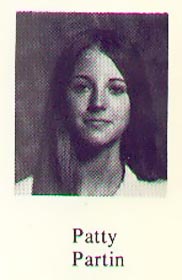
Her birth name is Patricia Lee Partin, she was affectionately called Patty.

After meeting Castaneda, she changed her name to Nury Alexander. Nury (with a y) appears on her original name change application, but Nuri (with an i) appears on other legal documents.

She was also known as Claude.


HER STATUS IN CASTANEDA GROUP

Castaneda declared that the Blue Explorer was "an entity of consciousness" that he described as a luminous, elongated being of brilliant blue color that inhabits the world of inorganic beings. It is considered an explorer because it has the ability to cross over into the reality of human beings.

And according to Castaneda, the Blue Explorer crossed over and transformed into Nury, but that is false because Nury was not a superhuman entity but a simple ordinary person.


MORE LIES

Castaneda also claimed that Nury was the daughter he had with Carol Tiggs (the nagual woman), but this assertion is also false because historical data shows that Nury's parents were others.


At the workshop held from July 23 to 25, 1993 at the Rim Institute in Arizona, the witch Florinda Donner announced that the Blue Scout was the daughter of Carol Tiggs.

The audience then asked her how she avoided having energy holes since Castaneda stated in his books that having children creates holes in the luminous egg.

Florinda explained that a sorceress could simply cause one of her eggs to begin dividing “by an act of will,” but that normally no warrior would want that because it would cause a huge “energy hole.” But in the case of the explorers, she stated that they had their own energy, but no body, so they could be conceived and born without sex and without causing energy holes in the mother.

This explanation is also false since there are no "explorers" mentioned by Castaneda.

And when Carol was later asked about this matter, she didn't address Florinda's story about parthenogenesis, but simply twirled around the edge of the platform, like a model on a fashion runway, asking, "Do you see any holes?"


At the workshop held from May 26-29, 1995 at the Omega Institute in Rhinebeck, New York, tensegrity instructor  Nyei Murez also stated that: "The Blue Scout is the daughter of Carol Tiggs. Carol Tiggs gave birth to her."

And Nyei also stated that the Blue Scout had been "missing for about ten years, from seven to seventeen chronological years old," returning approximately one year before Tiggs.

But if you read Nury's and Carol's biographies, you'll see that all of this assertions are lies. 


PHOTOS

Nury imitated Castaneda's habit of remaining very secretive, but over time some photos of her have been found.


The following photo was taken from her school yearbook when she was a teenager:


These photos were taken from a video filmed in 1997 when Nury was 40 years old.


VIDEOS

You can see this short video that was taken of Nury in 1997 starting at 0:35.


And also at the beginning of this other video it seems that Nury is the one who comes out accompanying Castaneda from the residence where he lived, and at the end of the video she picks him up and drives the car.


HER POEMS

In January 1996, Cleargreen began publishing Castaneda’s The Warrior’s Way: A Journal of Applied Hermeneutics. Four issues were mailed to subscribers before the journal was terminated in Spring 1996.

Castaneda proudly informed the Sunday group that Nury was primarily responsible for the design and artwork on the Journal, although the design credit contained in the journal itself was “Journal design by Elaby Gaethen.” This was clearly a pseudonym for Nury.

The second and third issues, for February and March, each contained a poem authored by “the Blue Scout.” The March poem was entitled “Angels’ Flight.” The February poem, entitled “The Conception of a B.F.,” reads as follows:

« She was made in an Arizonian trailer,
after a night of playing poker
and drinking beer with friends.
His foot got caught
in the torn lace of her nightie.
She smelled like a mixture of tobacco smoke
and Aqua Net hair spray.
He was thinking of his bowling score
when he found himself erect.
She was wondering how this life
could possibly last a lifetime.
She wanted to go to the bathroom
when she found herself pinned down.
He stifled a belch as she was conceived,
but luckily for her,
The two were in the desert,
and at that moment,
a coyote howled,
sending a chill of longing
through the woman’s womb.
That chill was all
she brought into this world. »


NURY DESCRIBED BY GEOFFREY GRAY

Journalist Geoffrey Gray wrote the following about Nury:

« But among all his disciples, the witch Castaneda cherished and looked after the most was Patricia Partin, who went by Nuri Alexander.

Partin had met Castaneda while waiting tables and attending classes at UCLA. And much like Dee Ann Ahlvers, she had experienced tragedy as a young girl. Partin’s dad was almost killed in an accident that left him with permanent damage.

Despite her graying hair, Partin acted like a child, claiming to be stuck in another dimension, at the age of seven, and trapped in time. For nearly 20 years with the cult, she played with dolls and spoke like a little girl.

Living in the compound, Partin became Castaneda’s daughter-concubine, a peculiar combo even for the witches. »


(Note: Geoffrey made three mistakes:

1. Nury was not a witch; this title was only given to Joanie Barker, Taisha Abelar, Florinda Donner, and Carol Tiggs, who had supposedly also met Don Juan.

2. It was later that Castaneda enrolled Nury and paid for her studies at the University of California, Los Angeles.

3. Nury did not live in the residence where Castaneda lived.)


NURY DESCRIBED BY JANET YANG

Late 1989, per interview in the Trickster podcast, film producer Janet Yang was invited to a session with Castaneda at a dance studio in Santa Monica where several women and a couple of men were present.

The invitation came after Yang and her film production partner Oliver Stone had a meeting with Castaneda and his agent Tracy Kramer (following an announcement Yang and Stone took out in Variety regarding the formation of a production entity called Ixtlan).

Nury was present at the dance studio session and Janet recalled she seemed “damaged,” and nervous, “like a deer in the headlights,” in contrast to the very extroverted Florinda.


NURY DESCRIBED BY JACOBO GRIMBERG

Jacobo Grinberg was a famous Mexican scientist who became interested in shamanism; in 1991 he spent a week with Carlos Castaneda and his witches, and regarding Nury he mentioned the following:

« Castaneda invited the men of the group to accompany him and together we went to find his daughter Nuri, a thin and extraordinarily sensitive girl, dressed as a man, who surprised me with her understanding of the Synteric theory.

She asked me about my occupation and I told her about my work at the University and the research on the synteric theory hypothesis.

Her understanding was direct and complete, as if my explanation had been perfectly engraved in her mind.
. . .
Castaneda and his nagual wife had had a daughter, and she was the thin girl we had met on the first day.

Nuri was intelligent and perceptive, like a blade of steel. However, there was something about her that was still undefined; something that still needed to mature. »


(In reality, Castaneda had adopted Nury, who was not a child since in 1991 she was already 34 years old but behaved as if she were a child.)


NURY DESCRIBED BY GABY GEUTER

Gaby Geuter was a student of Castaneda in the 1990s; she met Nury in the tensegrity workshops taught by Castaneda.

« Castaneda introduced Nury to us as his daughter and called her "the Blue Explorer." He would sometimes tell the story of having rescued her from another dimension when she was only seven years old, and that she had been raised in a Mexican orphanage.

He often presented her to his followers as a spiritual being, a model of perfection, and legally adopted her in the mid-1990s, making her an heir in his will.

Nury was very thin and fragile-looking, almost childlike, but she had a strong character. She was very self-assured because she was Castaneda's favorite and was allowed to do things that no one else would have dared to do, such as arriving late to the workshops. »


NURY DESCRIBED BY AMY WALLACE

The writer Amy Wallace was part of Carlos Castaneda's inner circle and also one of his lovers, and regarding Nury she commented the following:

« One woman in particular held a special place in Castaneda's group; she was known as Nury Alexander or the Blue Explorer. Supposedly, she was the most important being on this planet apart from the Nahual Castaneda, since she was the one who would lead us all to infinity.

But in reality she was Patty Partin, a 19-year-old waitress whom Castaneda had seduced somewhere in Southern California and who had been completely brainwashed, and whose bones were discovered in Death Valley in 2003.

Castaneda had taken the strange step of adopting Patty as his daughter in the 1990s, and he was also sexually active with her, which made her adoption as his daughter take on a completely strange atmosphere. Do you know what he told me once? He said, "You have the same vagina as my daughter, that's why I love her so much."

For almost twenty years, Nury lived with Castaneda, and despite her gray hair, she behaved like a child, claiming she had been trapped in another dimension since she was seven. She played with dolls and spoke like a little girl.

Castaneda told me: "Nury was seven years old when she first got into my bed, she climbed on top of me and thump, thump, thump! She wanted to do it at seven years old ... and we did! What could I do? I couldn't resist... she sexually assaulted me while I was asleep! »


Richard Jennings was a friend of Amy's, and he recounted the following:

« Between 1992 and 1993, as Amy got more involved with Castaneda, ultimately becoming his lover and a member of his inner circle, Castaneda told her constantly about Nury, claiming she was an otherworldly being he had rescued in “dreaming,” as later detailed in his book, The Art of Dreaming.

He also obsessed to her about Nury sexually, saying things like, “You should see my daughter naked! Wowie Zimbowie!”

Finally Amy met Nury at Hamburger Hamlet, at a luncheon that included Florinda, Carol and Castaneda. Amy described Nury in Sorcerer’s Apprentice on this occasion:

"Nury (then calling herself Claude) was tall, angular, and tense. Her face was pointy, her thin lips pouty; her graying hair jelled into spikey turrets. She bordered on anorexic thinness. She struck me as spoiled, yet her blue eyes twinkled and I optimistically hoped for lively conversation.”

They proceeded to talk about Paris, and Nury indicated she was impressed with Amy’s literary career and accomplishments, although she hadn’t read anything Amy had written. At the end of the meal as they were parting, Nury handed Amy a business card that read: “Nury ‘Claude’ Alexander–Finder, of Things Material, and Immaterial.”

Although Castaneda later called Amy to exultantly tell her she’d “passed the test” in her encounter with Nury, Amy found herself very underwhelmed by the person she’d been told was “supernatural, the proverbial divining rod.”

At a later lunch on Amy’s return to L.A., Nury told Amy she loved the Sinead O’Connor album Amy had sent her, and sings its raunchiest lyric, badly, “You fucked me so hard, there was blood on the wall.” Sexual topics dominated the lunch discussion, and Nury got frosty.

Castaneda later called Amy to berate her for her behavior at the lunch, which apparently offended Nury. Amy was then exiled from the group for awhile.


Between 1993 and 1996, as Amy  continued to get further involved with Castaneda and his group, eventually moving from Berkeley to Westwood to be closer to them, she was instructed by Castaneda on how to behave around Nury on those relatively rare occasions she saw her socially.

Castaneda even dictated speeches to Amy to use at those events to gain Nury’s pity, and to get a good seat by her at holiday dinners. Amy learned from Florinda and others that Nury had a passion for playing with dolls with her favorite young women in the group.

She was also told the story about the three apartments where Nury lived, two of which had nice views, looking out onto a garden, while the third was dark and shabby. Nyei was told she was going to occupy one of the nice ones, cooking organic meals and taking tea in the garden with Nury.

Nyei (one of the tensegrity instructors) had been moved out of her family’s home by Taisha and Kylie after meeting them at a lecture one of the Witches had given. Nury had briefly taken a liking to her, but the woman who ultimately became known as Zaia Alexander quickly took Nyei’s place as Nury’s favorite, becoming her lover and frequent companion. So Zaia got the nice apartment next to Nury while Nyei was relegated to the bad one. »


NURY DESCRIBED BY RICHARD JENNINGS

Richard Jennings was a student of Castaneda during his later years; he knew Nury well, and about her he commented the following:

« Many of the more junior Cleargreen people (and others who briefly came into Castaneda’s inner circle over the last several years) were "terrorized" by having to pass approval by the supposed "Blue Scout." Nury Alexander was held up to others in the group as a superior, "perfect" being, "not really human" in nature. The prevalent impression was that if Nury didn’t like you, you were "out." Castaneda also used Nury as a threat with the Sunday group for some months, claiming that if word got out about the sessions and a disapproving "Blue Scout" learned about them, they would be ended "in a flash."

When Castaneda would sometimes slip and say things about Nury that didn’t exactly fit the story that she was his "daughter"–e.g., referring to her as a "Catholic"–he would then expand on the story, claiming, for example, that for her first seven years she was raised in a Mexican orphanage that was run by Catholics.

I therefore dedicate the following chronology to the remaining Cleargreen staff, who might just benefit from the "cognitive dissonance" of knowing that documentary evidence clearly establishes that Nury, the supposed "perfect" warrior and "non-human" whose disapproval could spell the end of their association with Castaneda, had a normal birth to loving parents in Southern California, long before she met Castaneda in her late teens.

_  _  _

What if everything about you was a lie? If your origin and whole life story was the fantastic, grandiose concoction of a famous and powerful man who came into your life in your late teens and then dictated how and where you would live, supporting you all the while, for the next 20 years? Who would you be and how could you carry on after that man died?

Nury Alexander found she could not continue under those circumstances. When her inventor/creator ceased being around to maintain her on the absurdly high pedestal he had erected for her, she inevitably fell to earth and died. Welcome to the Blue Scout Chronology.

When they met, she was an attractive 19-year-old high school dropout, whose grades in school had been poor at best. Raised in a small, rural town, she was emotionally scarred by the crippling accident her doting father had suffered when she was only 11. The tragic accident caused her really to lose both parents, because not only did her severely brain damaged father have to go into nursing homes, her mother’s grief made her totally self absorbed, with no time or attention for her pre-teen daughter.

As a result, Patty grew up deeply narcissistically wounded and emotionally immature. Her friends of that time report that she escaped not only into drinking and drugs, but also fantasies of finding Hollywood stardom. When she met the man who had the financial and creative resources to give her that stardom and sense of specialness she sought, that she could never have attained on her own, she was totally ensnared. In return she gave him the one thing she had going for her: strong sexual energy and a sense of abandon.

In Castaneda world, the former Denny’s waitress with little education became an other worldly, cosmically advanced figure whose supposed creativity and narcissistic whims were indulged to the hilt.

Castaneda eventually adopted her as his daughter, so their intense sexual relationship also took on an incestuous edge. And she used her position as the pinnacle and arbiter of the Castaneda cult’s social hierarchy to attract young female lovers, who desperately competed for her favors and attention.

And all her bills and luxuries were fully paid for by her creator/lover/father. Given her arrested development and unchecked narcissism, her main activities when not having sex with her father or young female lovers were those of a child: playing with dolls and going to amusement parks. 

So this was the person Castaneda held up not only to his inner circle but also to those of us in the Sunday group and much larger contingent of Tensegrity workshop goers as the most evolved and cosmically attuned being–the one who was not only “ready to go” into the wonder of the infinite, but also to lead Castaneda’s group on its ultimate journey. Castaneda and his fellow supposed disciples of don Juan built her up to us before we ever met her, and Castaneda then oversaw and carefully scripted her handful of public speeches.

In reality, of course, she was only a special, cosmically wondrous creature in Castaneda’s eyes and storytelling. No wonder she couldn’t see a way to continue when her creator died. Failing to join the other four women closest to Castaneda on their well-planned suicide pact trip, she took off to Death Valley on her own, abandoning her red Ford Escort–its plates stripped, empty of luggage or anything else–to walk into the burning desert to her death at age 40. »


CONCLUSION

Nury was a young woman who fell for Carlos Castaneda's deceptions. He built her a fantasy world where she was the princess, but after Castaneda died, Nury couldn't return to the real world and ended up dying prematurely at the age of forty. She was yet another victim of this writer.